
The History and Evolution of Basketball
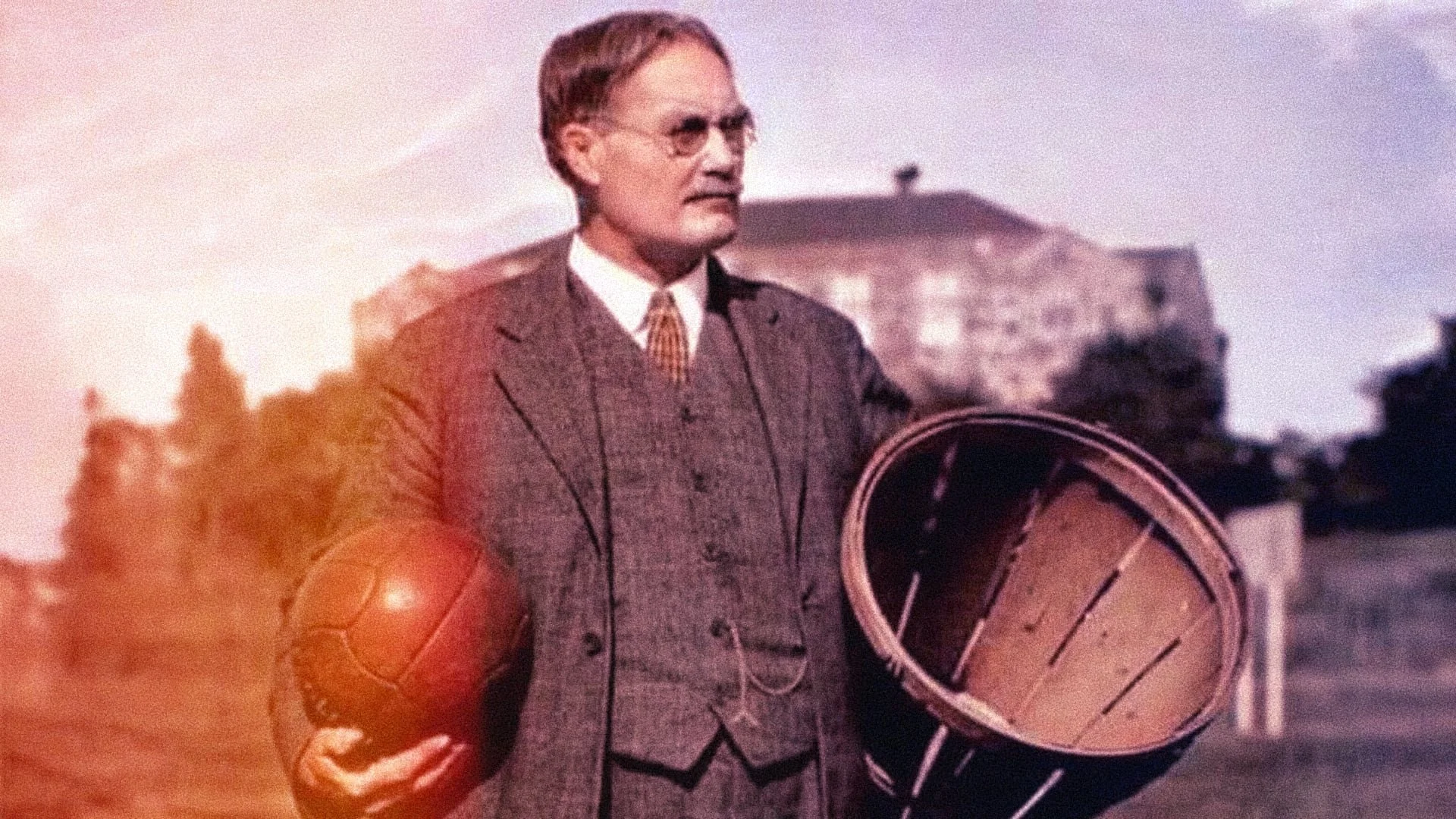
It was December 1891, in the gymnasium of the International YMCA Training School in Springfield, Massachusetts, when Dr. James Naismith introduced a new game to keep his students active during the harsh winter. Tasked with creating an indoor activity that promoted physical fitness without excessive physical contact, he devised a game that involved throwing a soccer ball into two peach baskets affixed to the balcony railings.
Little did he know that this simple innovation would give birth to basketball, a sport that would grow into one of the world's most popular and influential games.
Early Development and Codification
Naismith's original game featured 13 basic rules and nine players per side. The objective was simple: score points by tossing the ball into the opposing team's peach basket. However, with no hole at the bottom, the ball had to be retrieved manually after each score!
The sport’s appeal was immediate, spreading rapidly through YMCA centres across the United States and internationally. By 1893, just two years after its invention, basketball had crossed the Atlantic, with the first European game played in Paris.
Formation of Professional Leagues
As basketball’s popularity surged, professional leagues began to form. The National Basketball League (NBL) was established in 1937, laying the groundwork for organised professional play. However, it was the merger of the Basketball Association of America (BAA) and the NBL in 1949 that led to the creation of the National Basketball Association (NBA), which would become the premier professional basketball league globally.
The NBA’s rapid growth in the latter half of the 20th century propelled basketball into the mainstream, producing global superstars and elevating the sport’s profile worldwide.
The Birth of FIBA and Basketball’s Global Growth
Recognising the need for a unified governing body to oversee the sport's expansion, the International Basketball Federation (FIBA) was founded on 18 June 1932 in Geneva, Switzerland.
The founding members included Argentina, Czechoslovakia, Greece, Italy, Latvia, Portugal, Romania, and Switzerland. FIBA’s mission was to develop, regulate, and promote basketball on a global scale, ensuring that the sport’s rules were standardised across different nations.
FIBA played a pivotal role in bringing basketball to the Olympics, overseeing the first official Olympic basketball tournament at the 1936 Berlin Games. Today, FIBA organises major international tournaments, including the FIBA Basketball World Cup and continental championships, reinforcing basketball’s position as a truly global sport.
The Slam Dunk and Its Evolution
The slam dunk, now a staple of basketball excitement, has its own controversial history. Initially, the move was rareand even banned in collegiate play from 1967 to 1976, as officials feared it gave certain players an unfair advantage.
However, players like Julius Erving and later Michael Jordan revolutionised the dunk, turning it into an art form and a fan favourite, symbolising athleticism and flair.
The Shot Clock Revolution
By the early 1950s, basketball faced a crisis—teams would stall games by holding the ball for minutes at a time, leading to low-scoring, dull matches.
To combat this, the NBA introduced the 24-second shot clock in 1954, revolutionising the game’s pace and increasing scoring opportunities. This single rule change transformed basketball into the fast-paced, high-energy sport we know today.
The 'Game of the Century' and Basketball’s College Boom
One of the most pivotal moments in college basketball history occurred on January 20, 1968, when the University of Houston faced UCLA at the Astrodome.
Dubbed the 'Game of the Century', this was the first NCAA regular-season game broadcast nationwide in prime time, drawing a record crowd and elevating the sport’s profile. This moment helped pave the way for the modern-day March Madness phenomenon.
Basketball in the Olympics and the Rise of the Dream Team
Basketball had been demonstrated at the 1904 St. Louis Olympic Games but was only officially included in the Olympic programme in 1936.
However, one of the most defining moments for the sport came in the 1992 Barcelona Olympics, when professional players were allowed to participate for the first time. This led to the creation of the Dream Team, featuring legends like Michael Jordan, Magic Johnson, and Larry Bird.
The Dream Team dominated, winning gold and igniting basketball’s global expansion as millions of fans worldwide became captivated by the sport.
The Modern Era and Basketball’s Cultural Influence
Today, basketball is one of the most widely played and watched sports in the world. The NBA has expanded internationally, with players from Europe, Africa, and Asia becoming key figures in the league.
Beyond the court, basketball has influenced fashion, music, and entertainment, with players like LeBron James and Stephen Curry becoming cultural icons.
A Sport That Never Stops Evolving
From its humble beginnings in a YMCA gym to packed arenas across the world, basketball’s journey is a testament to innovation, resilience, and passion.
With international leagues thriving, FIBA continuing to expand the game, and technology enhancing performance, one thing is certain—basketball will only continue to grow.
Looking to bring your Basketball team to Portugal to develop and improve skills? Contact Move Sports today and we will tailor the perfect tour for you.